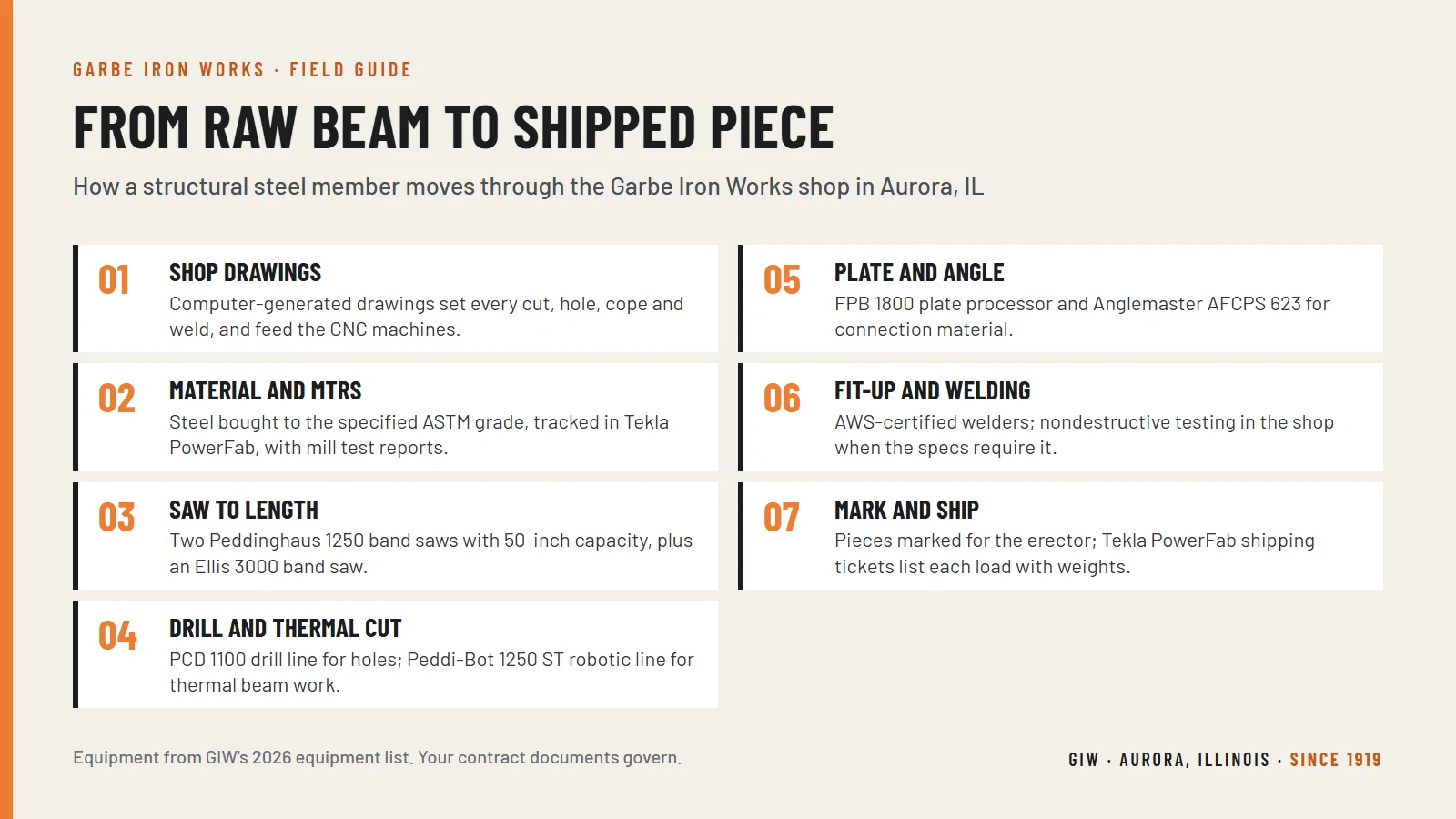
Structural steel fabrication is the shop work that turns mill-length beams, plate and angle into finished pieces: cut, drilled, coped, punched and welded to the shop drawings, then marked and shipped for erection. This guide walks one beam through our CNC structural steel fabrication shop in Aurora, Illinois, naming the machine that does each step and what each step means for your schedule.
What is structural steel fabrication?
Structural steel fabrication is the process of turning stock steel into the individual pieces of a building frame. AISC’s Standard for Certification Programs defines it as the preparation and assembly of parts into a shipping piece in accordance with the construction documents, and lists assembly, drilling, sawing, milling, thermal and mechanical cutting, and shipping as examples.
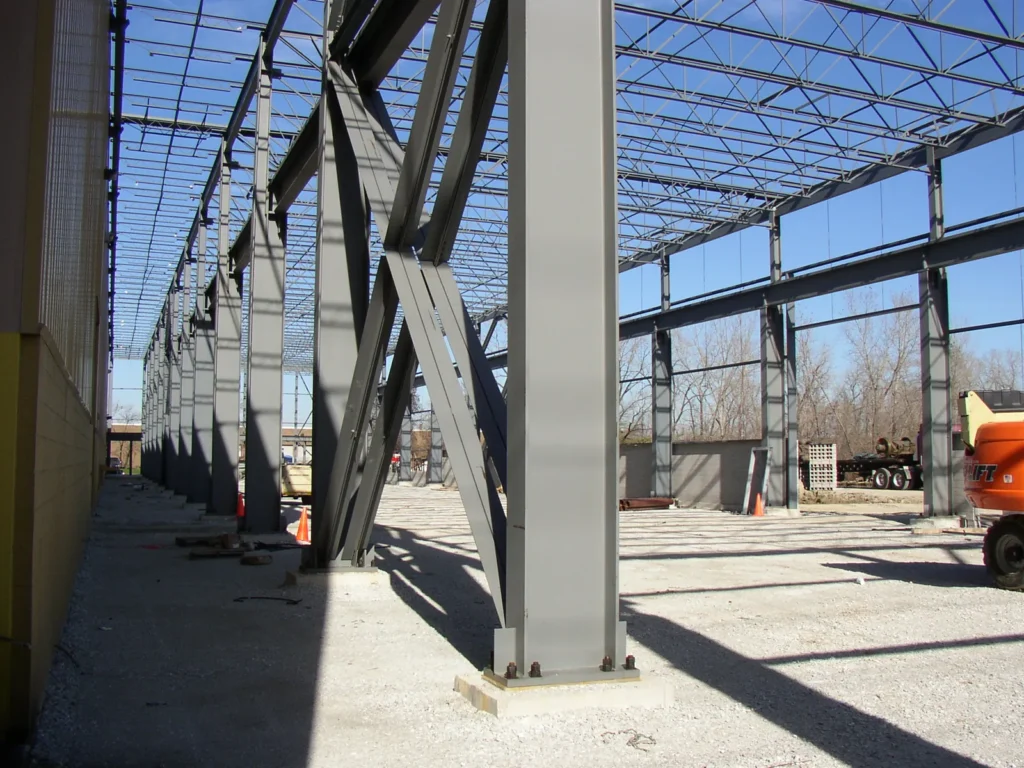
That definition draws a line around the shop: everything before a piece leaves the yard is fabrication, and everything after it is hooked to a crane on site is erection.
Fabrication vs. manufacturing
People sometimes call this work structural steel manufacturing. In practice the industry splits it in two. Mills roll the standard shapes and produce plate to ASTM specifications, such as ASTM A992, which covers rolled steel structural shapes for use in building framing or bridges. Fabricators buy that stock and turn it into job-specific pieces. A mill makes a wide-flange shape. A fabricator makes one particular beam for one particular building, with its holes, copes and clips exactly where the shop drawing puts them.
Our shop does the second job. We have done it in Aurora since 1919, and today our 32,000 sq. ft. shop on North Broadway takes work from about 1 ton to over 1,000 tons, with an annual capacity of more than 5,000 tons.
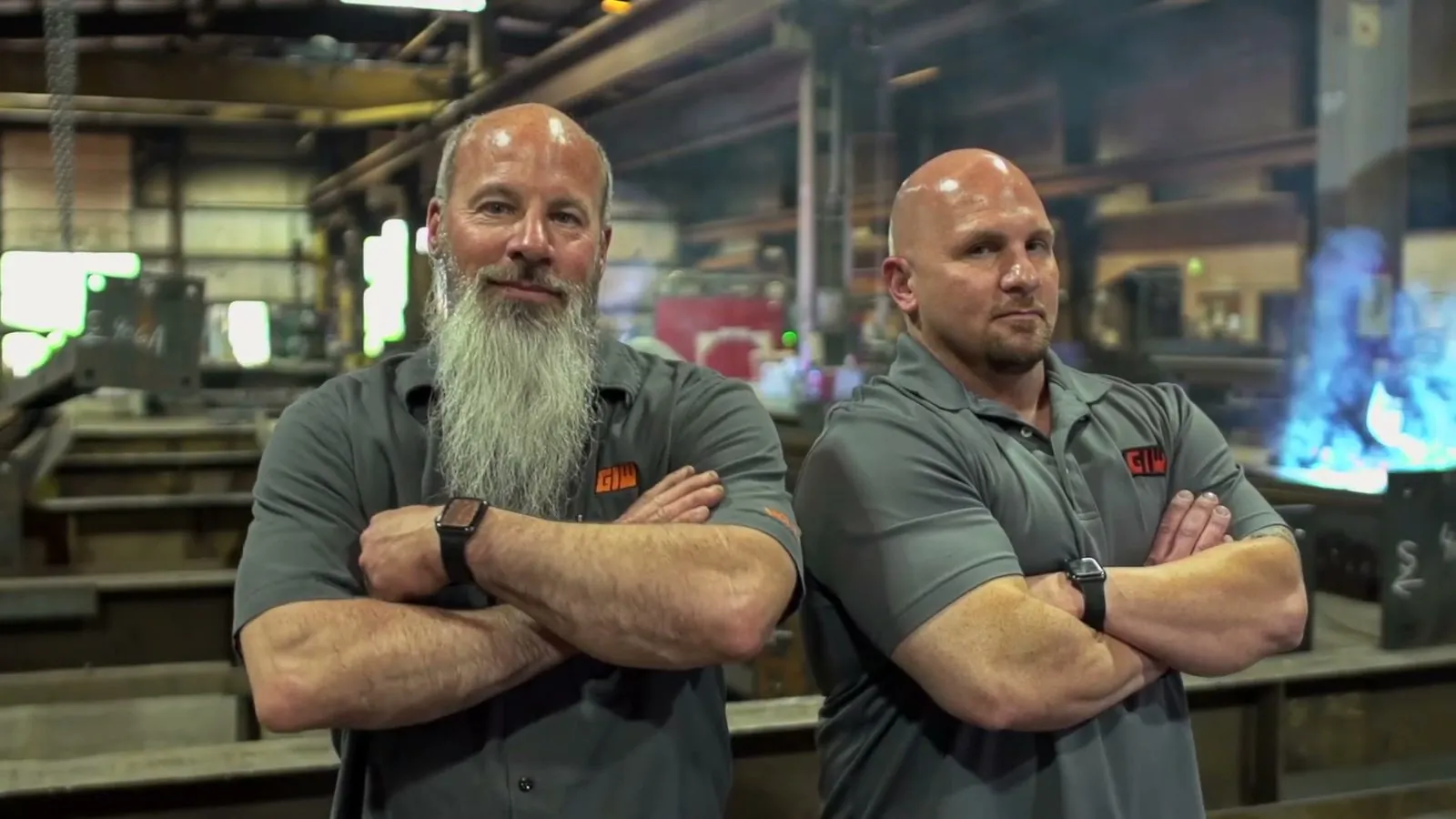 Watch: Maximizing Tonnage and Shop Floorspace (Peddinghaus, 4 min)
Fabrication vs. erection: who does what?
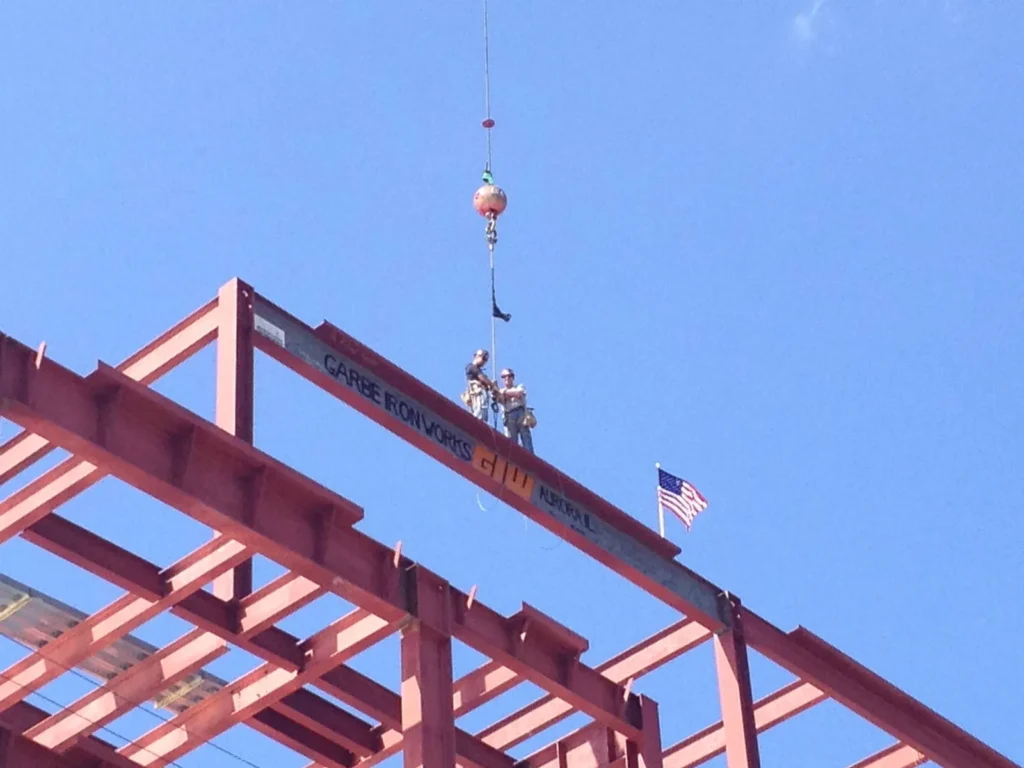
Fabrication happens in the shop and ends when a finished piece ships. Erection happens on site, and AISC defines it as assembling individual members into a structural steel building or bridge in accordance with the construction documents. The two use different crews, different equipment and often different contracts, which is where coordination problems start for a general contractor.
The AISC Code of Standard Practice speaks to that split. Section 7.1 of the 2022 Code says that if the owner’s designated representative for construction, usually the GC, contracts separately for fabrication services and for erection services, that party coordinates planning between the contractors. AISC’s toolbox talk on method of erection quotes the provision in full.
| Stage | Fabrication | Erection |
|---|---|---|
| Where | In the fabricator’s shop | On the jobsite |
| What happens | Cutting, drilling, coping, punching, fit-up, welding, marking and shipping | Assembling the shipped members into the frame |
| Final inspection under AISC 207 | Before the steel ships | After the erection work is complete |
| At GIW | Our Aurora shop | Erection subcontractors on our own project team |
We carry both inside one Division 5 package. Fabrication runs in our shop. Erection, decking and miscellaneous metals field work are subcontracted to crews we bring onto our own project team, including several AISC Certified Erectors. You hold one contract and have one point of responsibility. If you only need the shop work, we also write fabrication-only proposals, including for other fabricators who need help making a schedule. For what happens after the truck arrives, see the steel erection sequence, from anchor bolts to topping out.
Step 1: Shop drawings and CNC data
Every piece starts as a shop drawing. The engineer’s design drawings show what the building needs; the shop drawings show how each piece is built, with its piece mark, cut length, holes, copes and welds. Once the design team approves them, they release the work to the shop floor, and on a CNC floor they also become the machine data.
Detailing is part of our scope, and it ties directly to the machines. Our CNC equipment takes its data straight from the computer-generated shop drawings at the operator’s console, so the saws, the drill line and the plate processor all cut from the same numbers the detailer drew. We have worked toward this for decades. Our first NC machine went on the floor in 1973. In 1978 we became a full-time participant in the Sun Systems computerized detailing program, and that early work prepared us for SDS-2 when it came on the market.
Why it matters to a GC: a mistake on paper becomes a fix in the field. The approval cycle, connection design responsibility and revision control all live in this step, and we cover them in structural steel shop drawings, from detailing to CNC. Delivery method changes the timing too. On design-build work the steel design is worked out for economy from the start; design-build vs. design-bid-build for structural steel explains the difference for the steel package.
Step 2: Material and mill test reports
Fabrication cannot start until the right steel is on the rack. Beams, columns, plate and angle are bought to the ASTM specification and grade the engineer names, and each heat of steel comes with a mill test report recording its chemistry and mechanical test results, so inspectors and engineers can confirm the material meets the specification.
We buy, stock and track the steel for each job, and we supply the mill test reports with it. Purchasing and inventory run through Tekla PowerFab steel management software, merged with some of our own internal programs, so material, estimates and production control live in one system.
How far traceability has to go depends on your contract. AISC’s certification standard says traceability to mill test reports is necessary only when the contract specifically requires it, and a certified fabricator must have a documented procedure to maintain it from receipt through fabrication when it is required. If your specifications call for heat-number traceability on certain members, say so at bid. For a field-by-field walk-through of the document itself, see how to read a mill test report for structural steel.
Step 3: Sawing to length
Most main members start on a saw. Beams, columns and tubes arrive at mill lengths, and the saw cuts each one to the length on its shop drawing. Accurate lengths matter because the rest of the piece is laid out from them.
Our cutting line is two Peddinghaus 1250 band saws with 50-inch capacity, plus an Ellis 3000 band saw. Material moves between machines on 510 feet of roller conveyor, with horizontal transfers from conveyor to conveyor or to exit. One 20-ton bridge crane with a 76′-0″ span and four 10-ton bridge cranes, which can work in tandem for 20-ton picks, handle the heavy lifts. The full plant and equipment list has the rest.
Step 4: Drilling, coping and thermal cutting
After sawing, the beam gets the features that let it connect: bolt holes in the flanges and web, and copes or other cuts at the ends. This is where field fit is decided. A misplaced hole or a short cope shows up the moment the erector tries to set the piece, and the fix then happens in the air.
What is beam coping?
A cope removes part of a beam’s flange, and often some of the web, at the end of the member so it can frame into a girder or column without running into that member’s flange. A coped beam is common wherever the top of a beam has to sit level with the top of the girder it frames into. The cope’s size comes from the shop drawing, and AISC’s certification standard requires a certified fabricator’s detailing standards to spell out how holes, fasteners, cuts and copes are detailed.
The CNC beam drill line
Hole making is a key part of structural fabrication, for efficient shop and field assembly, and we run automated and manual systems to suit each project. Our PCD 1100 drill line has a 5-station tool changer and high-speed carbide drilling. Multiple magnetic-base core drills cover the holes that are better made by hand.
Thermal cutting
Thermal beam processing runs on the Peddinghaus Peddi-Bot 1250 ST, a robotic CNC thermal cutting line and the newest machine on our floor. It replaced our older robotic thermal cutting line. The footage we have of it so far was shot by drone when the line was installed; video of it cutting steel is coming. For other flame cutting we keep beam splitters, track burners and hand and plasma torches.
Step 5: Plate and connection material
Beams and columns connect through smaller parts: base plates, shear tabs, gussets, stiffeners, clip angles and brace angles. These are cut and holed on their own machines, then either welded to the main member during fit-up or shipped loose for bolting in the field, as the shop drawings direct. Each part needs the same care as the member it joins.
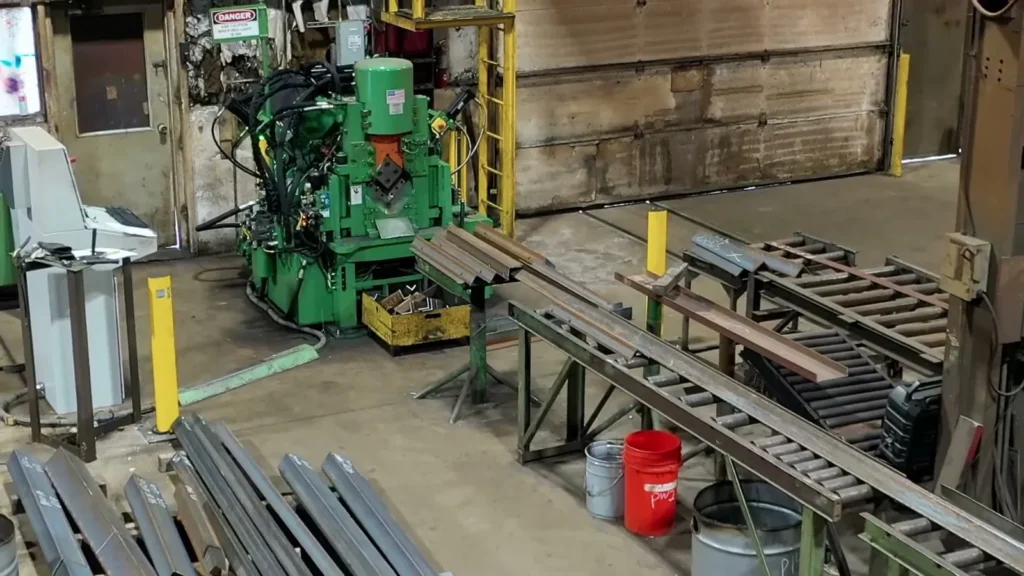
Plate goes to our Peddinghaus FPB 1800 plate processor, which cuts with plasma and punches with three hydraulic punches, for plate up to 1-1/4 inches thick and 6′-0″ wide. Angle goes to the Peddinghaus Anglemaster AFCPS 623, which puts holes in connection material and brace angles and handles simple cut-to-length work. A Piranha P-90 ironworker rounds out the line. A plate laser and a new shop layout are on the way, and we will show them once they are running.
Connection material is easy to overlook in a schedule because the pieces are small. A missing clip angle holds up a beam just as surely as a missing beam does.
Step 6: Fit-up and welding
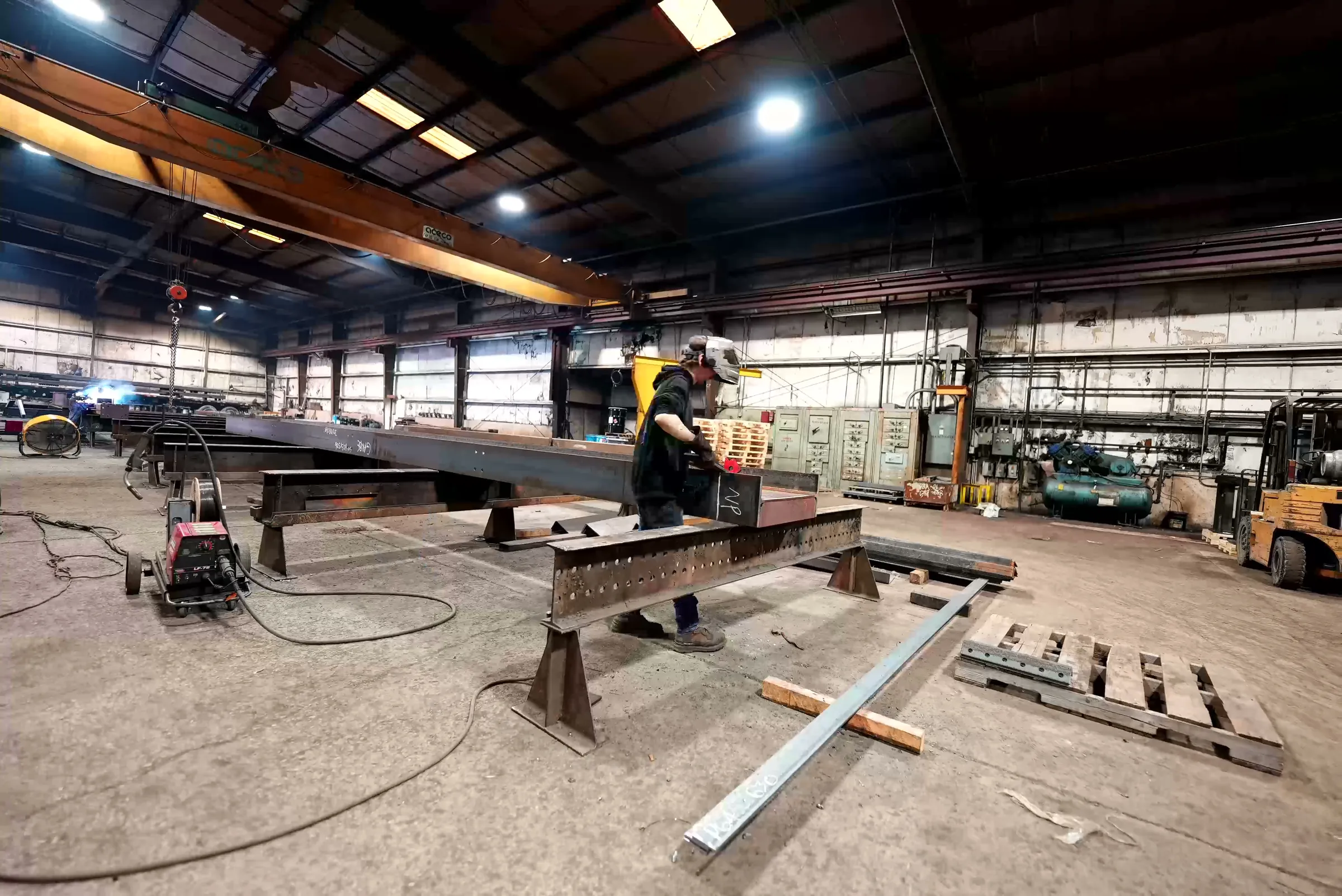
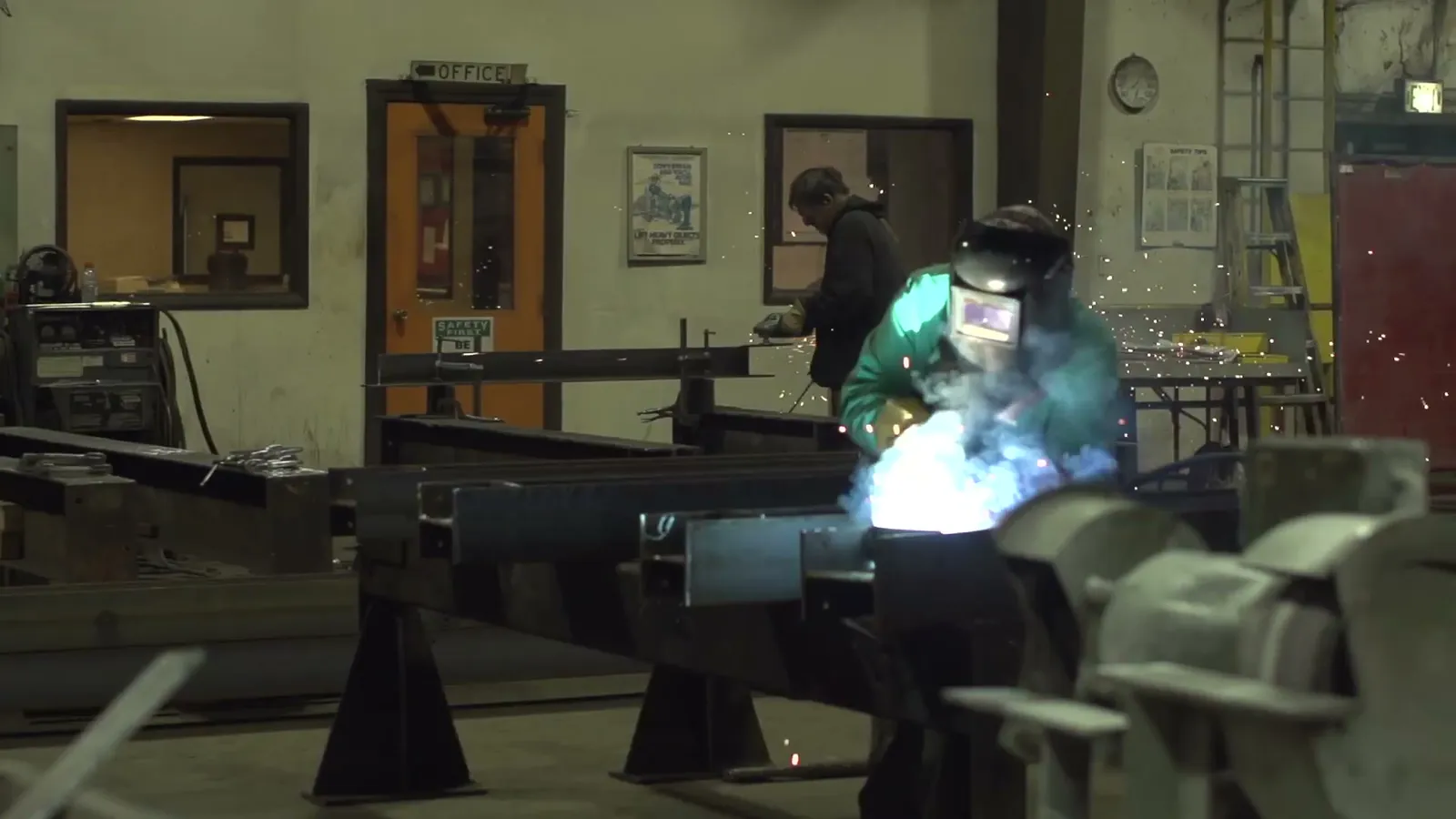
Fit-up is where loose parts become an assembly. A fitter locates plates, stiffeners and clips on the main member to the dimensions on the shop drawing and tacks them in place, and a welder then completes the welds. The welding code for structural steel is AWS D1.1, the Structural Welding Code for steel, which is routinely referenced in project contracts.
As the American Welding Society describes it, AWS D1.1 defines how welders and welding procedures are qualified and how welds are inspected and accepted. Every GIW welder is certified by the American Welding Society. AISC’s certification standard adds shop-level controls on top of the welding code: a certified fabricator manages its welding procedure specifications, preheat requirements, welder qualifications and performance records, and a method of tracing welds to the welders who made them.
Step 7: Quality control and nondestructive testing
Quality control runs through every step. Under AISC’s certification standard, a certified fabricator inspects material on receipt, inspects work in process where a requirement cannot be checked at the end, such as welding and bolting, and performs a final inspection before the steel ships. Nondestructive testing is added where the specifications call for it.
GIW holds continued AISC certification. Each year we take part in an AISC quality assurance audit performed by Quality Management Company, and we are certified for Steel Building Structures and as a Component Manufacturer – Bridge. Every welder is AWS certified, and we run nondestructive tests in our shop when contract specifications require them.
For a GC, the practical question is what to ask for. If your specifications require a certified fabricator, NDT on specific welds or heat-number traceability, put it in the bid documents so it is priced and planned. AISC certification: what it means for your project covers what the program checks and how to verify a fabricator.
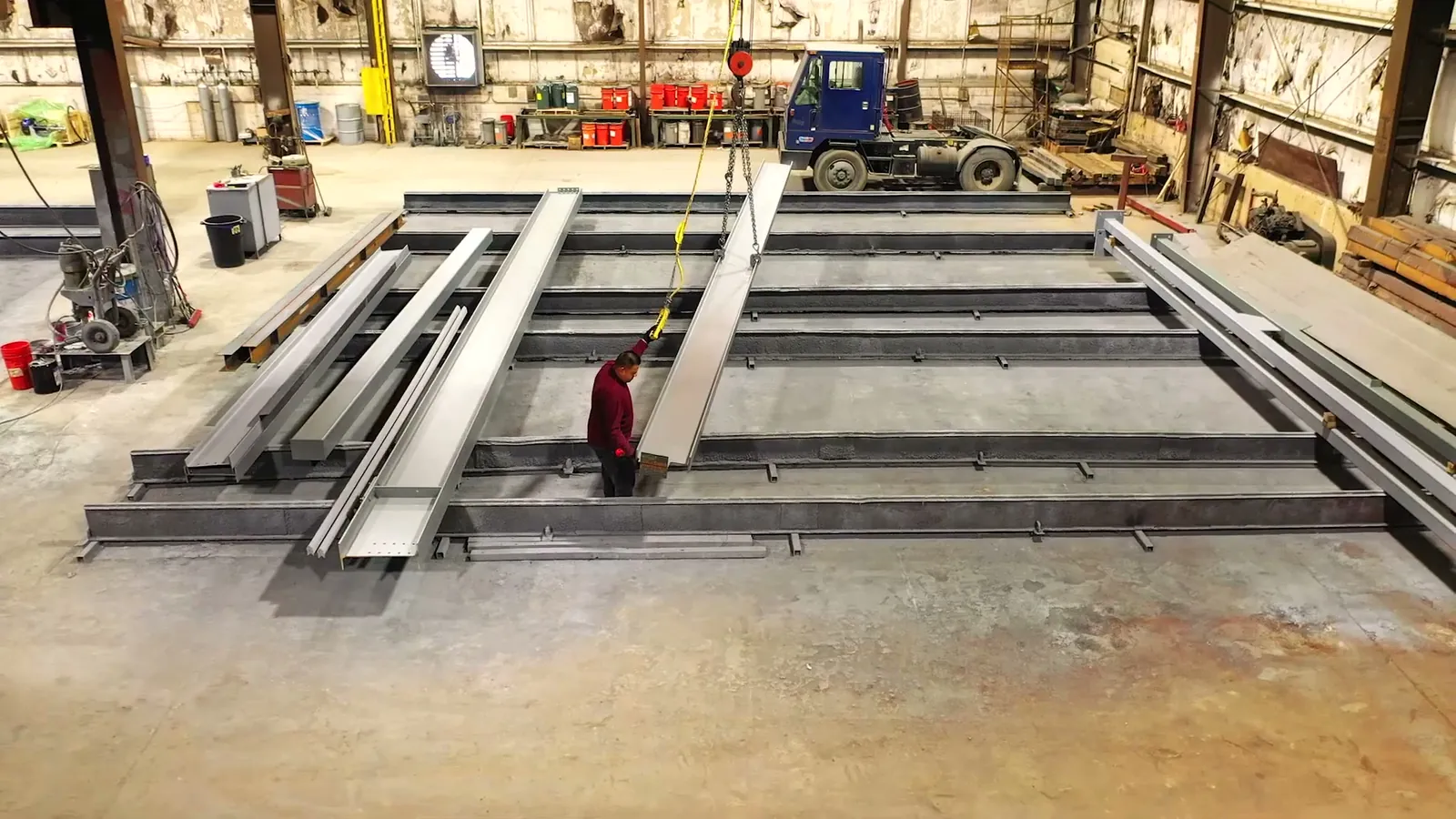
Step 8: Marking, shipping tickets and loading
A finished piece has to be found and set on site. Pieces are marked so the erector can match each one to its place on the erection drawings, and each load ships with a ticket listing what is on the truck. Good marking and clear paperwork keep the erector from sorting steel in the laydown area while the crane waits.
AISC’s certification standard requires a certified fabricator’s detailing standards to describe its piece-marking system and how shipping sequences are designated, and notes that marking can carry traceability through piece, assembly or group numbering. On our side, Tekla PowerFab produces shipping tickets with weights, and we can share those reports, along with drawing lists, with your team when they help you manage the job.
Ideally, loads leave in the order the erector will set them, which is easier to plan when the fabricator and the erector sit on the same team.
Beyond the frame: joists, deck and miscellaneous steel
A building’s steel package is more than beams and columns. Joists and deck are made by specialty manufacturers, while lintels, stairs, railings and platforms are fabricated much like any other steel. Putting all of it in the same Division 5 package as the frame keeps the pieces that bear on each other on one schedule and one contract.
We furnish steel joists and roof and floor deck as part of our scope, and the deck goes in through the decking subcontractors on our project team. For the joist side, read open web steel joists: K, LH and joist girders. For deck, see steel roof deck vs. composite floor deck.
Miscellaneous steel comes out of the same shop, the same AISC-audited quality program and the same AWS-certified welders as the structural work: stairs, railings, lintels, gates, platforms and embeds. Two common cases have their own guides: steel lintels for masonry openings, and structural steel mezzanines, which combine framing, deck, stairs and railings in one structure.
How a GC keeps fabrication moving
Many of the things that hold up fabrication are settled before the steel ever reaches the saws. Incomplete design documents, slow drawing approvals, an unsettled connection design approach and late changes all stop work on the floor. The fixes are simple, but they have to happen early in the job.
- Release complete design documents. Shop drawings can only be as complete as the drawings and specifications they come from.
- Settle who designs the connections. Whether connections are fully designed by the engineer, selected by an experienced detailer or designed by the fabricator’s engineer changes the detailing work.
- Plan for drawing review. Fabrication of a piece starts once its drawings come back approved, so review time belongs in the schedule.
- Put special requirements in the bid documents. Certification, NDT, traceability and coating requirements all affect price and sequence.
- Share the erection sequence early. Shipping can only follow a sequence the shop knows about.
- Send changes through one channel. A revision that reaches the detailer, the shop and the erector at the same time is a revision that gets built right.
That last point is why we offer single-point responsibility for the whole Division 5 scope. When one company owns detailing, fabrication and erection, a question in the field goes back to the people who drew and built the piece.
Frequently asked questions
What is the difference between fabrication and erection?
Fabrication is the shop work that turns stock steel into finished pieces: cutting, drilling, coping, punching, fitting and welding, then shipping. Erection is the field work of assembling those pieces into the building. GIW fabricates in its Aurora shop and manages erection through subcontracted erectors on its own project team.
What is structural steel manufacturing?
The term is often used for fabrication, but the industry usually splits the work. Mills roll standard shapes and plate to ASTM specifications. Fabricators like GIW buy that stock and cut, drill, cope, fit and weld it into job-specific pieces to the shop drawings.
What is beam coping?
Coping removes part of a beam’s flange, and often some of the web, at the end of the beam so it can frame into a girder or column without hitting that member’s flange. The size and shape of each cope come from the shop drawing.
What size fabrication jobs does GIW take?
We take fabrication work from as little as 1 ton to over 1,000 tons, and the shop has an annual capacity of more than 5,000 tons.
Where is Garbe Iron Works located?
Our 32,000 sq. ft. shop is at 456 N. Broadway in Aurora, Illinois, west of Chicago. We work for repeat clients throughout the upper Midwest, including other fabricators who send us a good share of subcontract work.
Have a steel package coming up? We quote full Division 5 packages and fabrication-only work, from about 1 ton to over 1,000 tons. Tell us about your project or call the office at 630.897.5100.
About the publisher. Garbe Iron Works has detailed, fabricated and erected structural steel in Aurora, Illinois since 1919. Our 32,000 sq. ft. shop runs Peddinghaus CNC lines, takes jobs from about 1 ton to over 1,000 tons, and carries the full Division 5 scope with single-point responsibility. GIW is AISC certified, and every welder is certified by the American Welding Society.